
You have been consistent. You have spent real money. You research ingredients, watch reviews, and follow routines. And yet months later — your skin is the same. Or worse.
You tell yourself skincare just does not work for you. Maybe your skin is too stubborn.
Here is what dermatologists actually see when patients walk into their clinics with this exact story: the problem is almost never the products. The problem is too many products, used in the wrong way, doing damage that makes everything else stop working.
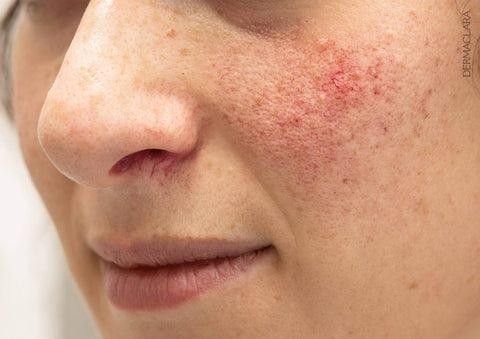
This is the number one mistake dermatologists see every single day: people treating their skin like a chemistry experiment, adding ingredients without understanding how they interact, and then wondering why nothing works. Let me tell you all reasons with solution why your Skincare Is Not Working.
Also Read
Skincare Routine for Teenagers With Acne: Simple, Affordable, and Actually Effective
The Real Reason Your Skincare Stops Working
When you use too many active ingredients at once — AHAs, BHAs, retinol, vitamin C, strong exfoliants — you are not giving your skin multiple benefits simultaneously.
You are triggering a cascade of damage that makes every product in your routine less effective.
Your skin has an outer protective layer called the stratum corneum. Think of it as a brick wall — skin cells are the bricks, and ceramides, fatty acids, and natural oils are the mortar holding everything together. This barrier has one primary job: keep moisture in and irritants out.
Your expensive serums are essentially being poured into a cracked container.
AAD’s guidance is clear: simpler routines, consistently applied, produce better long-term results than complex multi-step routines used inconsistently.
7 Signs Your Skin Is Overloaded — Not Just Dry or Sensitive
Most people misread overloaded skin as their skin type being “difficult” or “reactive.” They reach for more products to fix symptoms that their current products are causing. Here are the seven signs dermatologists look for that signal product overload, not inherent skin sensitivity.
1. Burning or stinging that was not there before. If products that used to feel neutral now sting — even gentle ones like moisturizers — your barrier is compromised. Intact skin does not sting from a basic moisturizer. That sensation is exposed nerve endings, not “the product working.”
2. Oiliness despite constant moisturizing. Your skin overproduces oil when it detects the surface barrier is damaged. It is an emergency compensation mechanism. Stripping your skin with harsh cleansers and acids triggers more oil production — the exact opposite of what you want.
Also Read
Does Tanning Oil Damage Skin? What Dermatologists Actually Say
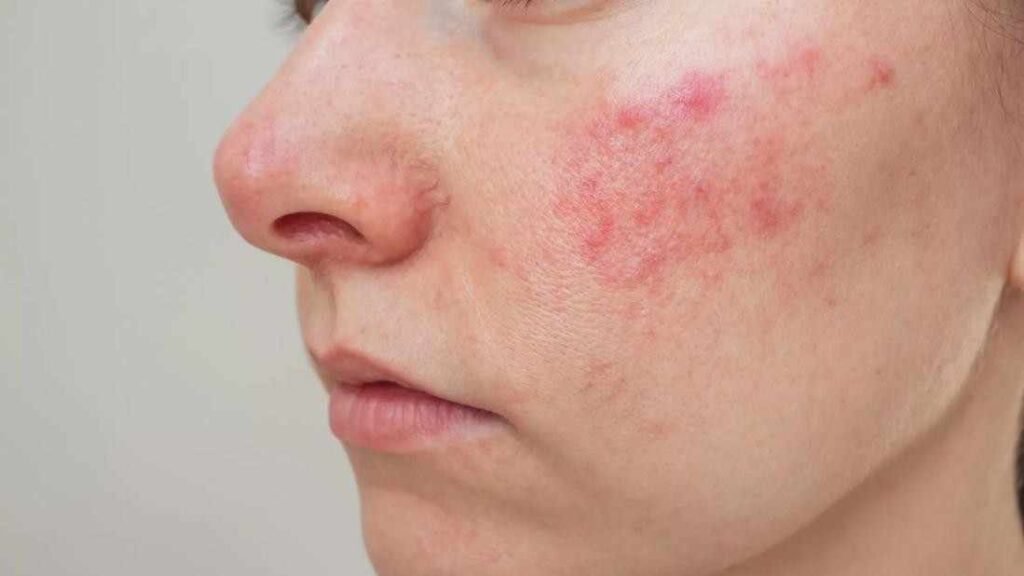
3. Redness that does not go away. Temporary redness after a strong treatment is normal. Persistent redness that has gradually appeared over weeks or months means chronic low-grade inflammation — almost always caused by too many actives.
4. Breakouts in new places. If acne that was previously concentrated in one area has spread, or new types of bumps have appeared where your skin was previously clear, the trigger is almost always a new product or combination of products disrupting your skin’s natural microbiome and barrier.
5. Flaking skin that does not respond to moisturizer. Surface flaking that persists despite applying moisturizer daily is not dryness — it is barrier damage. The skin is shedding faster than it can repair. Moisturizer does not fix this; barrier repair does.
6. Products that used to work have suddenly stopped. This is the most confusing symptom. When your barrier is damaged, even the products that were previously effective cannot reach the skin cells they need to reach. It is not that the product changed. It is that your skin’s ability to receive it has been compromised.
7. Your skin feels tight immediately after washing. Healthy skin should not feel tight after a gentle cleanse. That tight, squeaky-clean feeling means your cleanser stripped your natural oils. This is not effective cleansing — it is barrier disruption at the very first step of your routine.
Also Read
Skincare Routine for Rosacea: What to Use, What to Absolutely Avoid, and How to Calm Chronic Redness
What Dermatologists Actually Do When Nothing Is Working
When a patient comes in with skin that has stopped responding to their routine, the first thing most dermatologists do is not prescribe something stronger. They do the opposite: they strip the routine down to almost nothing and let the skin heal first.
This approach is called a skin barrier reset. The principle is simple: you cannot build a healthy routine on a damaged foundation. Repair first. Then build.
Here is exactly what dermatologists recommend for a proper barrier reset — not a rough approximation, but the specific clinical guidance that board-certified skin specialists give their patients.

The 3-Step Dermatologist Skin Reset Protocol
This protocol is based on guidance from the American Academy of Dermatology and mirrors what board-certified dermatologists recommend as a first-line intervention for sensitized, over-treated skin
Step 1: Switch to a gentle, pH-balanced cleanser only. A gentle, cream or gel cleanser with a pH between 5 and 6. Cleanse once daily — evening only if your skin is particularly reactive. The goal is to remove the day’s buildup without stripping a single molecule of your natural oil barrier.
Step 2: Apply a ceramide-rich moisturizer immediately after cleansing. Not a serum. Not a treatment. A moisturizer that contains ceramides, glycerin, and ideally niacinamide — the three ingredients that directly repair the components of your skin barrier. Apply it while your skin is still slightly damp. Morning and evening.
Step 3: Apply broad-spectrum SPF 30 or higher every single morning. No exceptions. UV exposure is the number one external cause of barrier damage, collagen breakdown, and pigmentation — undoing everything your skin is trying to repair overnight. This is non-negotiable even during the reset period, even on cloudy days, even indoors near windows.

That is the entire protocol for weeks one through four: gentle cleanser, ceramide moisturizer, SPF. Nothing else. No toner, no essence, no serum, no exfoliant, no treatment.
Why Less Skincare Means More Results?
A 2026 review published in CosmoDerma analyzed routine complexity and skin outcome data across multiple clinical cohorts and found that patients using four products or fewer showed better barrier function, lower TEWL (transepidermal water loss), and greater reported skin satisfaction than those using seven or more.
The mechanism is straightforward. Every additional active ingredient you add introduces three things: another potential irritant, another potential interaction with existing products, and another variable that makes it impossible to know what is or is not working. Dermatologists have a word for this: polypharmacy of skincare — using so many products that the cumulative effect is worse than using fewer.

Dr. Shereene Idriss, a board-certified dermatologist and one of the most cited voices in clinical skincare communication, has stated publicly that layering too many actives can disrupt the skin’s acid mantle and increase sensitivity — leading to accelerated aging rather than prevention. The goal of a skincare routine is to support the skin’s own biology. When you override that biology with too many competing instructions, the skin cannot function optimally.
The Products You Never Actually Needed
This section will save you money immediately. These are the product categories that dermatologists — not influencers — consistently identify as unnecessary for the vast majority of people. They are not harmful in isolation, but they contribute to routine complexity without meaningful clinical benefit.
Toner. Historically, toners existed to restore skin pH after harsh, high-pH bar soaps. If your cleanser has a modern, pH-balanced formula — which all quality cleansers now do — your skin’s pH self-corrects within minutes anyway. A toner adds a step, another potential irritant, and product cost. Most dermatologists do not use one themselves.
Eye cream. The skin under your eyes is thinner, yes — but it responds to the same ingredients as the rest of your face. A gentle moisturizer applied carefully to the orbital area does exactly what a separate eye cream does, for a fraction of the cost. The clinical evidence for eye creams outperforming regular moisturizers in the periorbital area is minimal.
Face mist. Misting your face with water mid-day sounds hydrating. In low-humidity environments, it is the opposite — it draws moisture out of your skin as it evaporates. Unless your mist contains humectants like hyaluronic acid or glycerin to hold the water against your skin, you are slightly dehydrating yourself with every spritz.
Multiple serums layered simultaneously. Using three serums in a single routine is not three times the benefit. It is three times the variables, three times the potential interactions, and for most skin, three times the irritation. One targeted serum addressing your primary concern, used consistently, outperforms three generic ones every time.
Physical scrubs. Mechanical exfoliation with abrasive particles creates microtears in the skin surface and disrupts the acid mantle. The American Academy of Dermatology recommends chemical exfoliants over physical scrubs for virtually all skin types. If you are using a physical scrub, replacing it with a weekly low-concentration AHA or BHA will produce better results with significantly less barrier disruption.

The Skincare Philosophy That Actually Changes Your Skin
Every dermatologist who works with patients long-term arrives at the same conclusion: consistency with a few right ingredients beats complexity with many wrong ones. This is not a minimalism trend. It is how skin biology actually works.
Your skin does not benefit from variety. It benefits from depth. One cleanser, used consistently, that matches your skin’s pH. One moisturizer, used morning and evening, that supports barrier function. One targeted active, given twelve weeks to produce measurable change before anything else is added. This is not the routine a brand will sell you. It is the routine a dermatologist will give you.
The people with genuinely excellent skin — the kind that holds up across decades, across climates, across hormonal changes — are almost never using the most products. They are using the fewest that their skin actually needs, applied with discipline and patience. That combination is not exciting to market. But it is the only thing that consistently works.
Frequently Asked Questions
Why is my skincare routine not working even though I am consistent?
Consistency with the wrong routine is not the same as consistency with an effective one. If you are consistently using too many actives, you are consistently damaging your skin barrier — and a damaged barrier prevents even the most effective products from working correctly. The solution is not more consistency with the same products. It is stripping back to a three-product barrier repair routine for four weeks, then rebuilding one ingredient at a time.
How many skincare products should I actually use?
Dermatologists consistently recommend four to five products as the clinical sweet spot: a gentle cleanser, one targeted serum, a moisturizer, and SPF. An additional treatment (retinol, AHA, or BHA) can be added once the barrier is healthy. Every product beyond this requires a specific clinical justification — not a marketing claim, not a social media recommendation.
Can too many skincare products actually damage your skin?
Yes, definitively. The American Academy of Dermatology identifies over-treating as one of the most common causes of self-inflicted skin damage. Multiple actives used simultaneously can erode the skin barrier, trigger chronic low-grade inflammation, disrupt the skin microbiome, and create sensitization — a state where the skin becomes reactive to products it previously tolerated. Dermatologists call this “cosmetic dermatitis” and it is increasingly common in people who follow complex multi-step routines.
How long does a skin barrier reset take?
A minimum of four weeks is required for one complete skin cell turnover cycle. Most dermatologists recommend four to eight weeks on a stripped-back routine before introducing any new active. You will know the reset is working when stinging, tightness, and persistent redness begin to resolve — usually around weeks two to three. Do not rush this phase. The time invested here determines how well everything you add afterward will perform.
Is it okay to use retinol and vitamin C in the same routine?
Not simultaneously, and only on a healthy barrier. If your skin is currently compromised, neither retinol nor vitamin C should be in your routine until the reset is complete. Once your barrier is healthy, use vitamin C in the morning under SPF and retinol at night after moisturizer — never applied directly together. This is the standard dermatologist protocol for combining both without barrier disruption.
My skin breaks out when I stop exfoliating. Does this mean I need to exfoliate daily?
No. This is one of the most common skincare misconceptions. If stopping exfoliation causes breakouts, it means your skin has become dependent on exfoliants to manage congestion that your barrier should be managing on its own. Daily exfoliation prevents your skin from developing this natural function. The solution is a barrier reset, then reintroduction of exfoliants once or twice weekly — giving your skin the chance to resume its natural renewal process without constant chemical intervention.
Can changing weather cause my skincare to stop working?
Yes, and this is medically well-documented. Temperature, humidity, UV index, and pollution levels all affect how your skin behaves and what it needs. A routine built for one climate often needs adjustment when that climate changes. Dermatologists recommend reassessing your routine every season — not replacing everything, but evaluating whether your cleanser, moisturizer, and SPF are still appropriate for current conditions. Oily-skin formulas in humid summers, richer moisturizers in dry winters, higher SPF in peak UV months.
What should I do if my skin gets worse after starting a new product?
Stop the new product immediately and return to your previous routine. Give your skin two to four weeks to stabilize before deciding whether the reaction was a true incompatibility or initial adjustment. Dermatologists distinguish between purging (temporary worsening from cell turnover acceleration, specific to retinoids and AHAs) and genuine reaction (redness, burning, new breakouts in unusual locations). If you are uncertain, consult a board-certified dermatologist before reintroducing the product.
Bottom Line
The skincare industry sells complexity. Dermatology teaches simplicity. These two things are in direct conflict, and most people’s skin suffers because of it.
Your skin does not need more products. It needs fewer, better-chosen ones, applied consistently, with enough patience to let the results actually develop. The people with genuinely healthy skin are not using twelve steps. They are using four, with discipline and time.
If your skincare is not working, do not reach for something stronger. Strip back, reset your barrier, and rebuild one targeted ingredient at a time. That is not a compromise. That is exactly what the dermatological evidence recommends — and it is the approach that produces lasting, real results.