The first time I lost an entire tray of fresh herbs to the back of a walk-in fridge, my head chef didn’t shout. He just looked at me, then at the blackened basil, and said, “Jahed, your fridge doesn’t forget. You do.” That one sentence changed how I’ve stored food for the rest of my career, and it’s the exact lesson I want to hand you today.
Most home cooks think food storage is just about closing the fridge door. It isn’t. It’s about building a system so simple that you never have to think about it again — and that system has a name: FIFO food storage, short for First In, First Out.
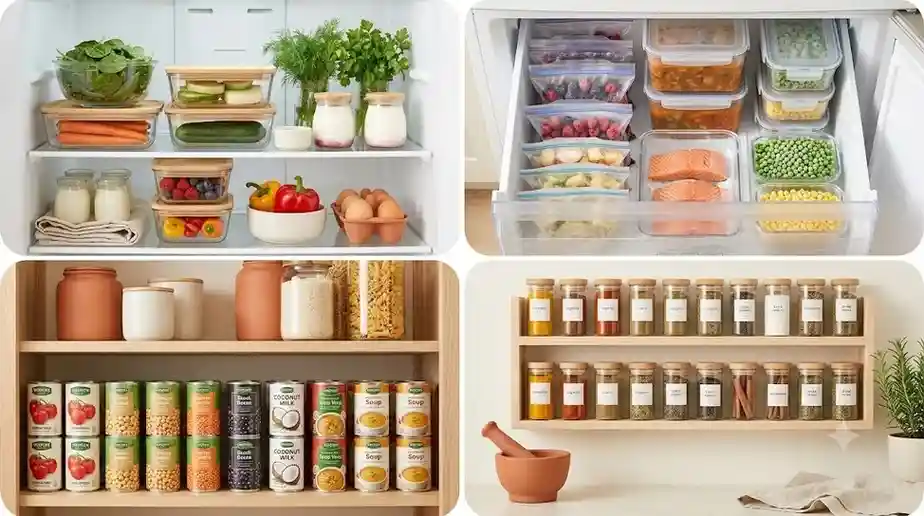
In this guide I’m not going to give you the textbook definition and leave you there. I’m going to walk you through the exact zone-by-zone system I use in my own kitchen fridge, freezer, pantry, and spice rack so you can set it up once this weekend and never lose another ingredient to the back shelf again.
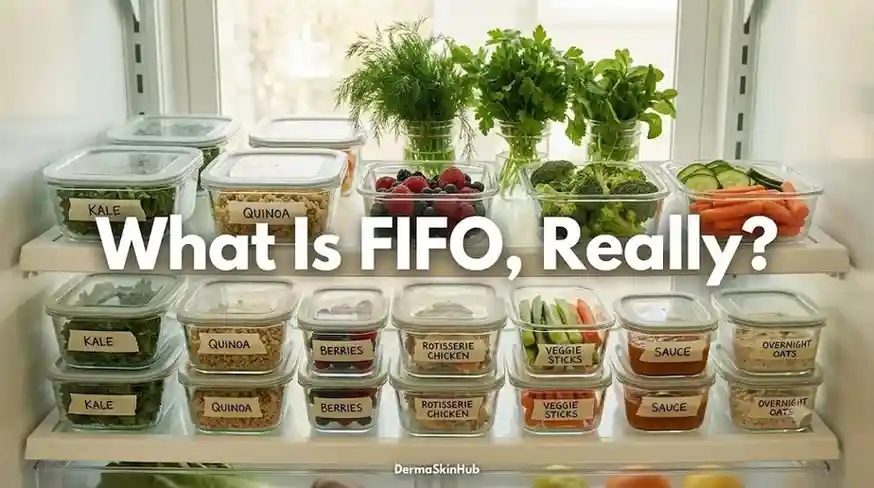
What Is FIFO, Really?
FIFO means the ingredients that came into your kitchen first are the ones you cook with first. New groceries always get placed behind older ones, never in front. It sounds almost too simple to matter — until you calculate how much food the average household throws away every year simply because it got buried and forgotten behind something newer.
Also Read
How to Get Bronze Skin Without Sun: 5 Methods That Actually Work
Your home kitchen runs on a smaller scale, but the math is exactly the same: older stock in front, newer stock behind, always. It’s not a professional trick that’s too complicated for home use — it’s actually the opposite. It’s one of the simplest habits you’ll ever build.
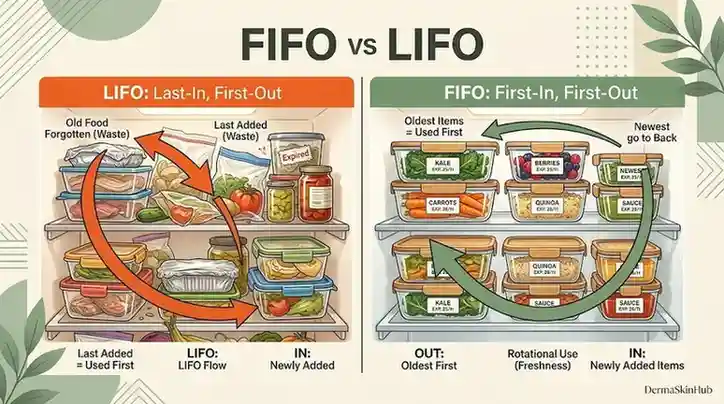
FIFO vs. LIFO: Why Order Matters
The opposite of FIFO is LIFO — Last In, First Out — which is exactly what happens by accident in most kitchens. You buy new milk, shove it to the front because it’s closest, and the older carton quietly expires behind it. LIFO is never a strategy; it’s just what happens when nobody is paying attention. FIFO is the deliberate fix, and the difference between the two systems is the difference between a fridge that wastes money and one that saves it.
In a professional kitchen, LIFO habits get caught during inspections. At home, they get caught by your nose a week too late. Once you understand this difference, you start seeing LIFO mistakes everywhere the yogurt pushed to the back, the sauce jar hiding behind three new ones, the frozen bag buried under this week’s shopping.
4 FIFO Rules for Safer Food Storage Zone-by-Zone
Instead of treating your kitchen as one big space, break it into four zones. Each one needs its own small routine, and once you’ve set each zone up correctly, maintaining it takes only a few minutes a week.
Zone 1: The Refrigerator
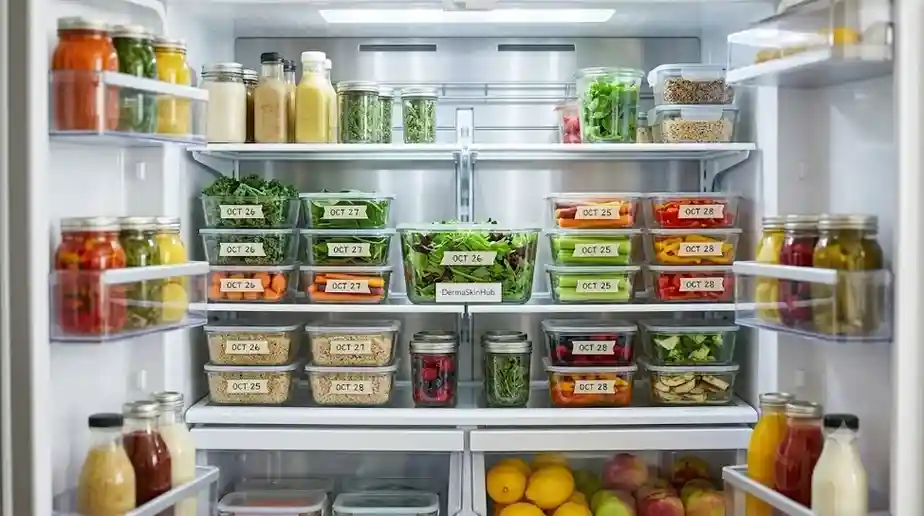
- Dairy, leftovers, and opened sauces go on eye-level shelves, oldest items toward the front.
- Raw meat always sits on the bottom shelf, in a sealed container, so nothing can drip onto ready-to-eat food.
- Every leftover gets a strip of tape with the date it was cooked — no exceptions, even for “just tonight’s dinner.”
- Group similar items together so you’re never hunting through three different shelves for the same category of food.
Also Read
Niacinamide Benefits for Skin: Full Guide (2026)
Zone 2: The Freezer
Frozen food doesn’t spoil the way fresh food does, but it does lose quality over time — texture changes, freezer burn sets in, and flavor fades. Keep a simple rule: newer bags go flat, at the bottom or back; older bags stay upright and visible at the front. A freezer you can actually see into is a freezer you actually use, instead of one where things disappear for a year.
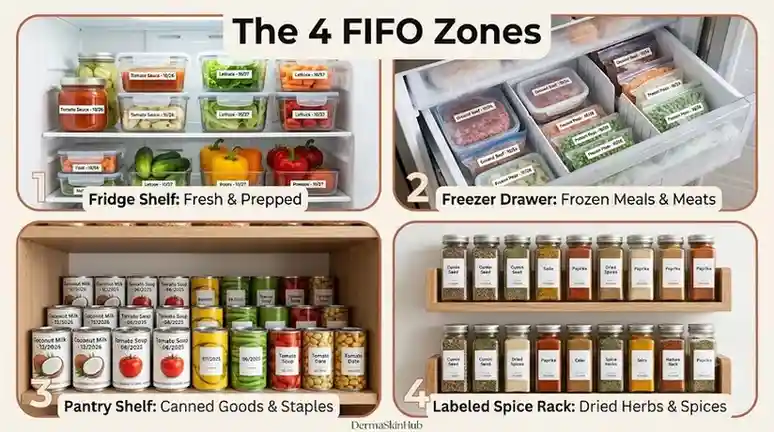
Zone 3: The Pantry
Rice, flour, canned goods, pasta — rotate them the moment you unpack groceries. Push older cans toward the front row and slot new ones behind. This single five-minute habit after every shopping trip is the one that saves the most money over a year, because dry goods are exactly the items that quietly expire unnoticed at the back of a cupboard.
Zone 4: The Spice Rack
Spices don’t go “bad” in a dangerous sense, but they lose aroma fast. Write the month and year on the bottom of each jar when you open it. If a spice has been open for over a year and you can’t smell it anymore, replace it — it’s doing nothing for your food except taking up space.
A Simple Weekly FIFO Routine
- Before you shop: scan the fridge and pantry for anything close to its use-by date, and plan at least one meal around it.
- When you unpack: move existing stock forward before placing new items behind it. Never place a new item in front just because it’s faster.
- Once a week: do a five-minute “front row check” — anything sitting at the very front should be used within the next two days.
- Once a month: do a deeper clean of one zone at a time, checking dates and wiping down shelves.
Why FIFO Protects Your Health, Not Just Your Wallet
Bacteria don’t announce themselves. Food can look and smell fine while quietly building up pathogens that cause foodborne illness. FIFO doesn’t replace common sense — always check for smell, texture, and visible spoilage — but it dramatically lowers the odds that anything gets forgotten long enough to become dangerous in the first place.
Also Read
Niacinamide Benefits for Skin: Full Guide (2026)
This is why professional kitchens pair FIFO with strict date labeling. The system isn’t just about avoiding waste; it’s a genuine food safety practice that protects everyone eating from that fridge, whether it’s a restaurant full of guests or your own family at the dinner table.
Common FIFO Mistakes I See All the Time
- Placing new groceries in front because it’s faster in the moment.
- Skipping labels on “small” leftovers, like half an onion or a spoonful of sauce.
- Buying in bulk without a rotation plan, so the oldest bag never resurfaces.
- Overpacking shelves so the back becomes a black hole nobody checks.
- Trusting memory instead of labels — even chefs with years of experience get this wrong under pressure.
Teaching FIFO to the Rest of the Household
A FIFO system only works if everyone using the kitchen follows it, which is often the hardest part. Keep labels simple, keep the front-row rule visible, and involve kids or housemates in the weekly check. When everyone understands that older food goes in front, the system runs itself instead of relying on one person to police it.
Frequently Asked Questions
Does FIFO work for a small fridge or a shared kitchen? Yes — the smaller the space, the more FIFO actually helps, because there’s less room for things to disappear unnoticed.
Do I need special labels or containers? No. A roll of masking tape and a marker is genuinely enough to start today.
How is FIFO different from just checking expiration dates? Expiration dates tell you when something might go bad. FIFO makes sure you actually use it before that point arrives.
Final Thoughts
FIFO food storage isn’t a professional-kitchen trick that’s too complicated for home use — it’s actually the opposite. It’s one of the simplest systems you can build, and once it becomes second nature, you’ll spend less time wondering what’s hiding in the back of your fridge and more time cooking with ingredients that are actually fresh. Start with one zone this week. The rest will follow.