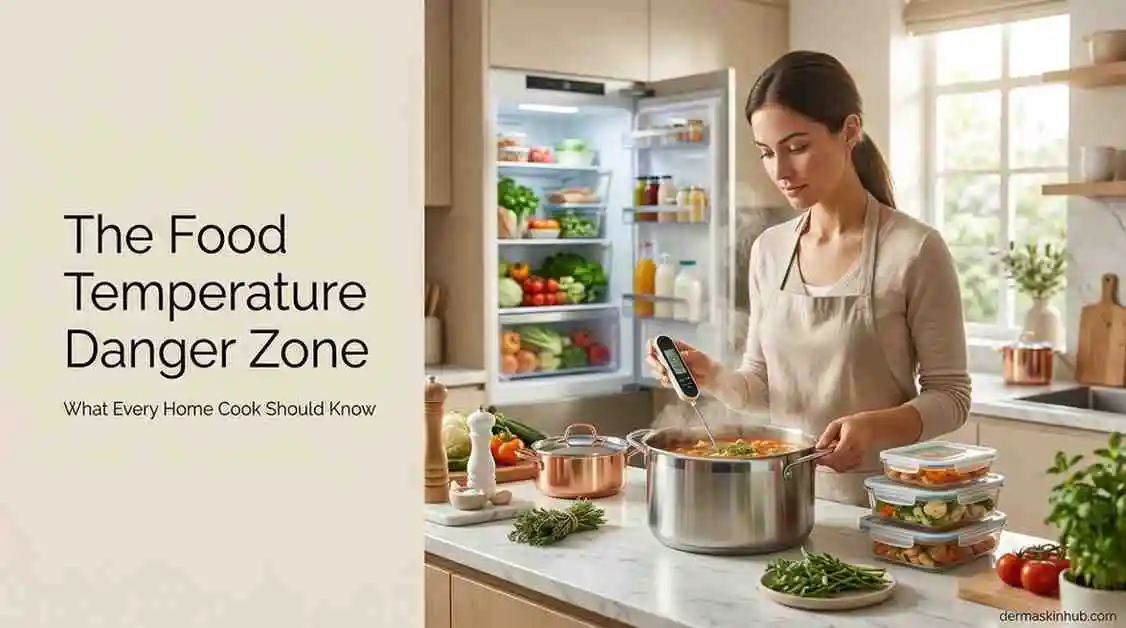
During my early training, a health inspector walked into the kitchen unannounced, pulled out a thermometer, and went straight for the buffet line without saying a word. Nobody panicked, because our head chef had drilled one number into us for months: 40 to 140.
If you know that range and respect it, you will never fail a food safety check, and more importantly, you will never make a guest sick.
That range is what professionals call the temperature danger zone, and understanding it is the single most important food safety lesson I can hand you, whether you’re running a kitchen or just feeding your own family on a Tuesday night.
What the Temperature Danger Zone Actually Is?
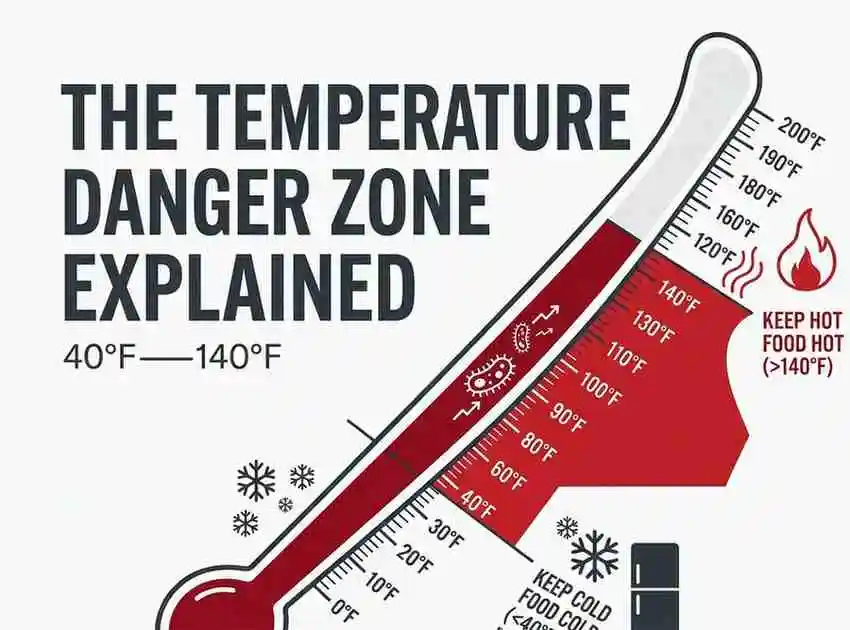
Bacteria in food multiply fastest between 40°F and 140°F (roughly 4°C to 60°C). Inside this range, bacteria can double in number in as little as twenty minutes. Below 40°F, growth slows dramatically. Above 140°F, most harmful bacteria start dying off. The danger isn’t in either extreme — it’s in the space between them, which is exactly where food sits every time it’s cooling on the counter or waiting to be served.
Also Read: [High Protein Meal Prep Like a Professional Chef]
Understanding this range changes how you think about every stage of cooking, from the moment you pull raw chicken out of the fridge to the moment leftovers go back in. It isn’t about fear — it’s about knowing exactly where the risk window is so you can move through it quickly instead of lingering in it by accident.
The Two-Hour Rule
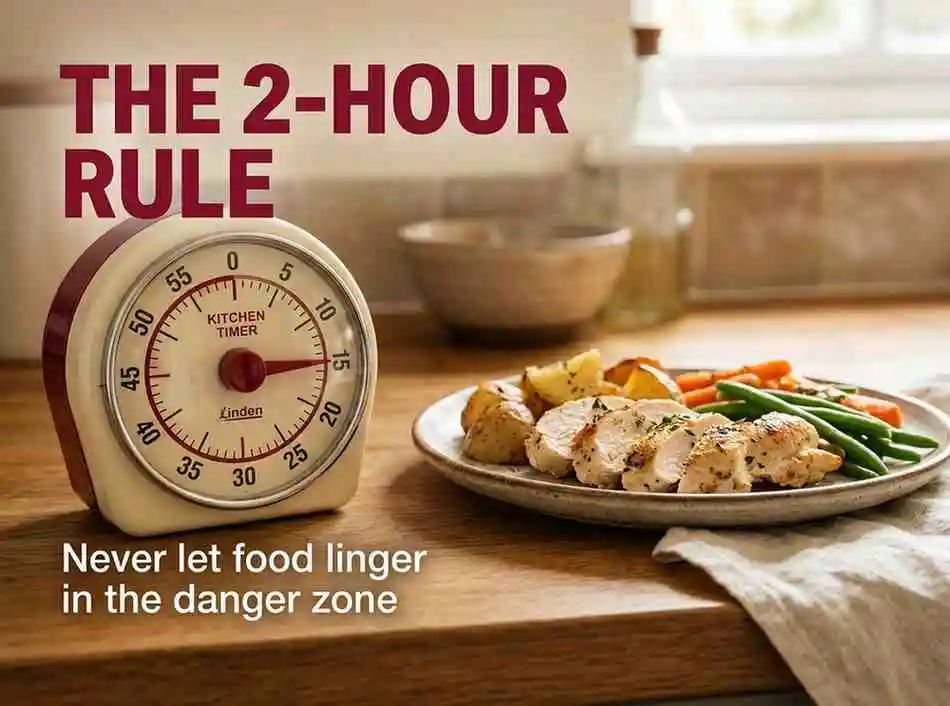
Perishable food should never sit in the danger zone for more than two hours total. If the room is above 90°F — think outdoor buffets or a hot kitchen in summer — that window shrinks to just one hour. Once that time passes, the safest decision is always to throw the food out, even if it still looks and smells fine. This is one of the hardest habits to build because it goes against the instinct to trust your senses, but bacteria growth happens long before any visible warning sign appears.
In a professional kitchen, we track this with timers, not memory. At home, the easiest version of this habit is simply noting the time food comes off the heat and setting a mental or literal clock from that moment.
Where Home Cooks Get Caught Out Without Realizing It
- Cooling leftovers on the counter before refrigerating — this can easily eat up your two-hour window without you noticing, especially with a large pot of soup or stew.
- Slow-cooker mishaps — using a slow cooker to reheat instead of cook can leave food in the danger zone far too long before it ever reaches a safe temperature.
- Thawing meat on the counter instead of in the fridge or under cold running water, which lets the outer layer sit in the danger zone long before the center even defrosts.
- Buffet-style serving at parties, where food sits at room temperature far longer than anyone actually tracks.
- Packed lunches left in a bag all morning without any form of cold storage.
How to Keep Food Safely Out of the Zone
Keep Cold Food Cold
Refrigerate perishables at 40°F or below. Use a simple fridge thermometer — the dial on the door is rarely accurate. For outdoor events, nestle food directly in ice rather than just placing it near a cooler bag, since proximity to ice is not the same as sitting in it.
Keep Hot Food Hot
Once food is cooked, hold it at 140°F or above using a slow cooker, chafing dish, or warming tray if it won’t be served immediately. A slow cooker is excellent for holding temperature — it is not designed to safely bring cold food up to temperature in the first place, and using it that way is one of the most common home food-safety mistakes.
Also Read: [How to Repair a Damaged Skin Barrier]
Cool Leftovers Quickly and Correctly
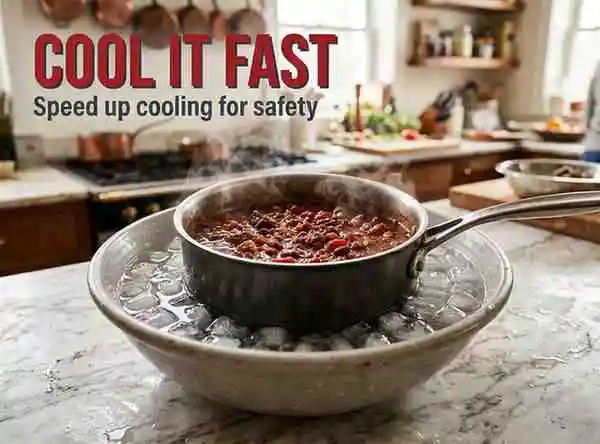
Split large batches of soup, curry, or stew into shallow containers before refrigerating. A deep pot of hot food can take hours to cool through in the fridge, quietly sitting in the danger zone the entire time even though it’s technically inside a cold appliance.
Reheat Properly, Not Just “Warm”
Leftovers should be reheated to an internal temperature of 165°F, checked with a food thermometer — not judged by touch, steam, or how long something has spent in the microwave.
4 Facts About the Food Danger Zone Cheat Sheet
- Refrigerator: 40°F or below
- Freezer: 0°F or below
- Hot holding: 140°F or above
- Safe reheating: 165°F internal temperature
Why This Matters More Than People Think
The unsettling part of the danger zone is that dangerous bacterial growth often produces no visible warning. Food can look, smell, and taste completely normal while already carrying levels of bacteria capable of making someone seriously ill. That’s exactly why professional kitchens rely on thermometers and timers instead of instinct — and why your kitchen at home should too, especially when cooking for children, older family members, or anyone with a weaker immune system.
Building the Habit Into Your Routine
The easiest way to make this stick is to attach it to something you already do. Every time you take food off the heat, glance at the clock. Every time you’re about to refrigerate leftovers, ask whether they’re already in a shallow container. Every time you reheat something, reach for the thermometer instead of guessing. None of these steps take more than a few seconds, but together they close almost every gap where the danger zone usually causes problems.
Frequently Asked Questions
Is it safe to eat food that’s been in the danger zone for just a little over two hours? No — once the window has passed, the safest choice is always to discard it, since visible signs of spoilage aren’t reliable.
Does reheating food kill bacteria that grew during the danger zone window? Reheating destroys many bacteria, but some produce toxins that survive cooking, which is why prevention matters more than correction.
Do I really need a food thermometer at home? Yes — it’s one of the cheapest tools in a kitchen and the only reliable way to confirm safe temperatures instead of guessing.
Final Thoughts
You don’t need a commercial kitchen setup to respect the temperature danger zone — you need a cheap food thermometer, a habit of checking the clock when food comes off the heat, and the discipline to throw something out when it’s been sitting too long. That one habit alone prevents more foodborne illness than almost any other kitchen practice.