
One of the most persistent myths in skincare is that people with darker skin tones don’t need sunscreen.
The reasoning goes: more melanin means more natural protection from the sun, so SPF is a “white people product.”
This belief causes real harm and it’s worth understanding exactly why it’s wrong before getting into which products work best. Let me ease for you to know Best Sunscreen for Dark Skin.
The Truth About Melanin and Sun Protection
Melanin does provide some natural UV protection. People with very deep skin tones (Fitzpatrick types V-VI) have an estimated natural SPF of about 13-15 compared to roughly SPF 3-4 for very fair skin (Fitzpatrick type I-II).
That difference in baseline protection is real.
But SPF 13 is not adequate sun protection by any modern dermatological standard dermatologists universally recommend a minimum of SPF 30 for daily use.
Also Read
Why Your Skincare Is Not Working: #1 Mistake Dermatologists See Every Day
More critically: melanin-rich skin experiences sun damage differently, not less. The consequences of unprotected UV exposure for darker skin tones include:
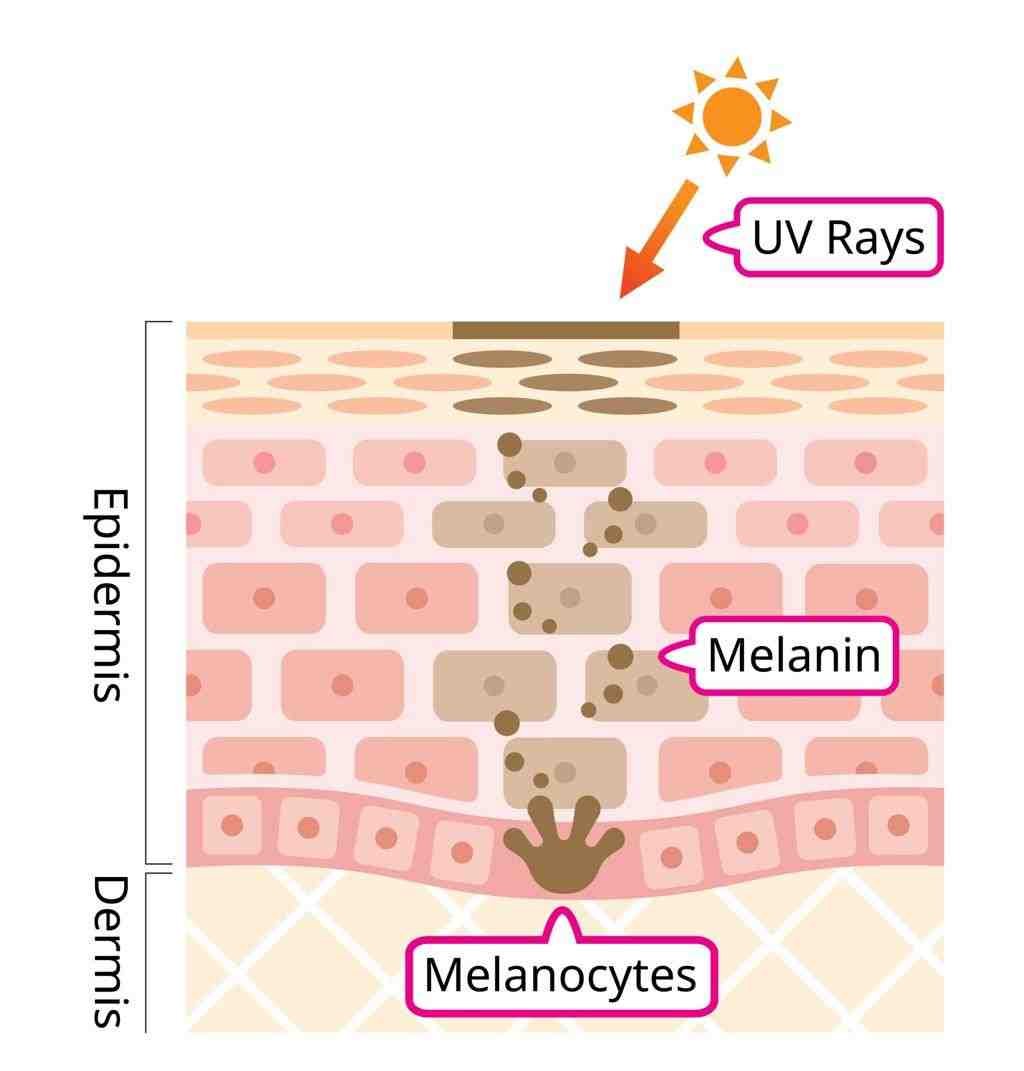
Hyperpigmentation and melasma: Dark spots, post-inflammatory hyperpigmentation, and melasma are significantly more prevalent and persistent in medium to deep skin tones. UV exposure is the primary trigger for all of these. Not wearing SPF while treating hyperpigmentation is like trying to fill a bucket while the bottom is open.
Skin cancer: While the incidence of skin cancer is lower in darker skin tones, the mortality rate is significantly higher largely because skin cancer in people of color is more frequently diagnosed at advanced stages, partly because of the mistaken belief that “dark skin doesn’t get skin cancer.”
Uneven skin tone and photoaging: UV damage accumulates over decades and shows up as uneven pigmentation, loss of skin clarity, and accelerated aging that is just as real in darker skin as in lighter skin, even if it appears differently.
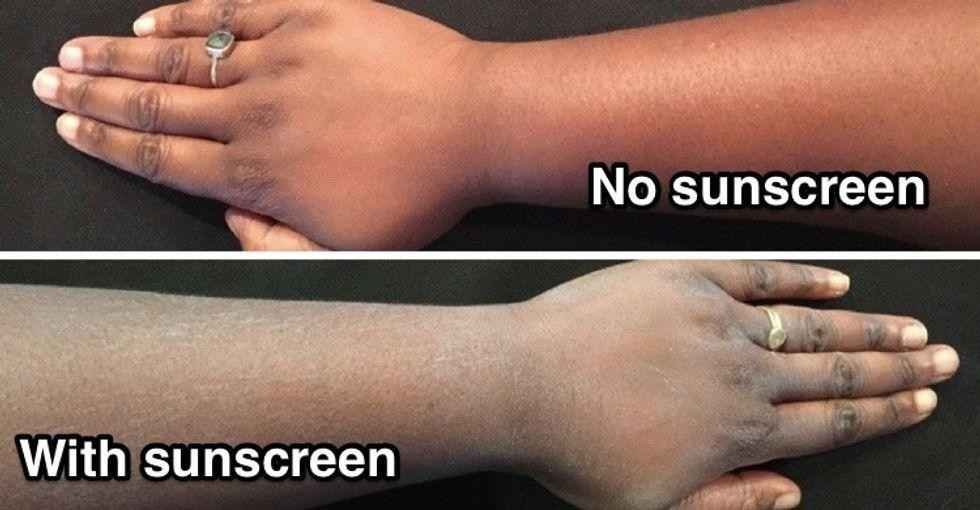
The White Cast Problem
So why do so many people with dark skin tones avoid mineral sunscreens? Because zinc oxide and titanium dioxide the two active ingredients in mineral (physical) sunscreens leave a white or gray cast on medium to deep skin tones that is both cosmetically unacceptable and visually obvious.
This is a legitimate formulation problem, not a character flaw in mineral SPF.
The good news: this problem has been substantially addressed through formulation advances, including:
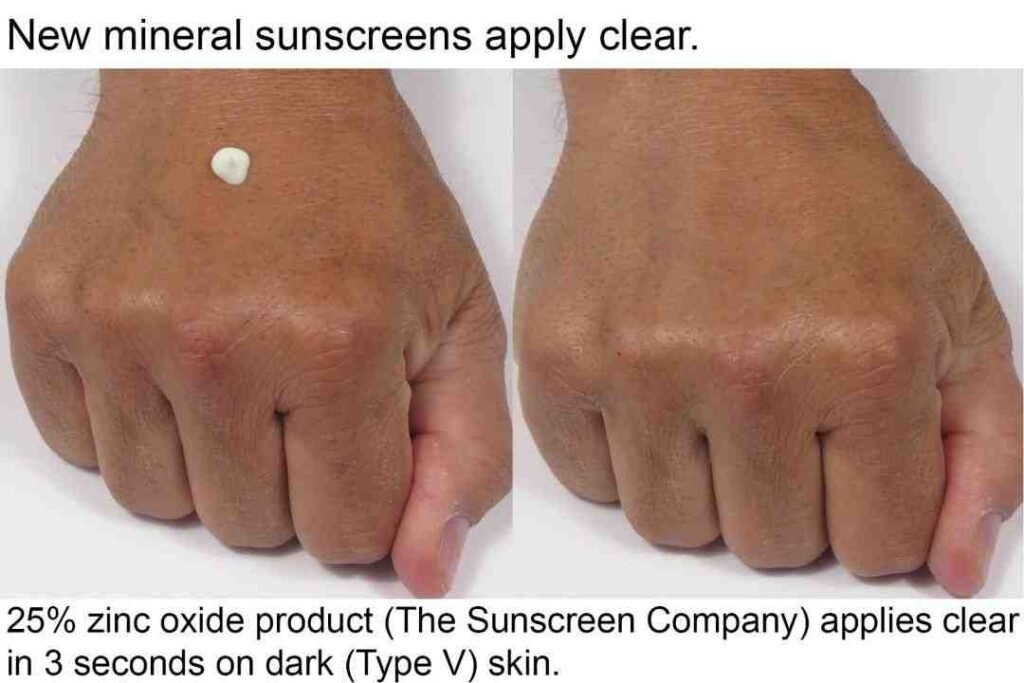
Tinted mineral sunscreens: Tinted mineral SPFs have become significantly more sophisticated many now offer multiple shades from light to deep, allowing darker skin tones to find formulas that blend naturally.
Micronized zinc oxide: Reducing zinc oxide particle size decreases white cast while maintaining UV-blocking efficacy. Many modern mineral SPFs use micronized or nano-sized zinc oxide specifically to reduce the ghosting effect on darker skin.
Chemical sunscreens: Chemical (organic) filters like avobenzone, tinosorb, and octinoxate absorb UV radiation rather than reflecting it, and leave no white cast at all. They’re the natural solution to white cast for dark skin the main concern is that some chemical filters (particularly oxybenzone) have absorption concerns that make some people prefer to avoid them, especially during pregnancy. Chemical SPFs using newer-generation filters like Tinosorb S and M or Mexoryl SX are both effective and carry a cleaner profile.
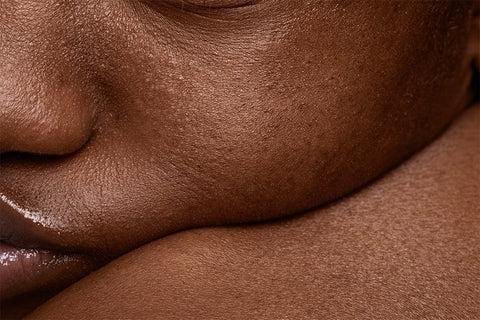
What to Look for in Sunscreen for Dark Skin
For Minimal to No White Cast:
Chemical sunscreens no white cast by nature. Modern chemical filters (Tinosorb, avobenzone, homosalate combinations) are safe, stable, and leave a clean finish. Tinted mineral sunscreens iron-oxide-based tints counteract white cast and add visible light protection. Micronized zinc oxide formulas look for “transparent,” “sheer,” or “invisible” on labels. Hybrid SPFs combine chemical and mineral filters for a balance of aesthetics and coverage.
For Oily Skin (Common in Warmer Climates):
Gel-formula SPFs or “oil-free” labeled chemical SPFs generally have the best finish on oily skin. Korean and Japanese SPF formulas have historically been particularly well-regarded for their lightweight, non-greasy finishes many are now widely available internationally.
For Dry Skin:
Cream-formula SPFs with humectants (glycerin, hyaluronic acid) or light occlusives provide both SPF and moisture. Hybrid SPF moisturizers serve double duty and save steps.

Application: The Quantity Problem
A major reason SPF doesn’t work as advertised for most people: underapplication. SPF ratings are tested at 2mg/cm² of skin.
This translates to approximately a nickel-sized amount (1/4 teaspoon) for the face alone. Most people apply a quarter of that amount.Underapplying SPF 50 can result in effective protection closer to SPF 10-15.
For this reason, “more SPF on less product” is a worse strategy than “lower SPF applied generously.” SPF 30 applied at the right quantity outperforms SPF 100 applied in a thin layer.
The common recommendation: use the “two finger rule” —squeeze SPF along the length of your index and middle finger for the face, and use that amount each morning.

Reapplication
SPF degrades with UV exposure after 2 hours of outdoor exposure, SPF has degraded significantly and needs reapplication. SPF powder formulas make reapplication over makeup practical for those who wear it.
Setting sprays with SPF are a more convenient option but should supplement, not replace, the initial cream application.
For external reference on skin cancer statistics in people of color, the Skin Cancer Foundation publishes updated statistics and risk information by skin type and ethnicity.
Frequently Asked Questions
Do Black people need sunscreen?
Yes. While melanin-rich skin has higher natural UV resistance than fair skin, it does not provide adequate protection against UV-induced skin cancer, hyperpigmentation, or photoaging. SPF 30 minimum daily is recommended for all skin tones by dermatological authorities.
What SPF is recommended for dark skin?
Dermatologists recommend SPF 30-50 for daily use across all skin tones. Higher than 50 provides diminishing additional protection but no harm if preferred. Consistent application of SPF 30 is significantly more protective than inconsistent application of SPF 100.
Which sunscreen has no white cast for brown skin?
Chemical sunscreens (no white cast by design), tinted mineral sunscreens with iron oxides in deeper shades, or micronized/nano-zinc formulas labeled “transparent” or “sheer” all minimize or eliminate white cast. Korean and Japanese SPF formulas are known for lightweight, no-cast finishes.
Can sunscreen help with dark spots?
Sunscreen alone won’t fade existing dark spots, but it’s essential to prevent new ones forming and to stop existing spots from deepening. UV exposure is the primary driver of hyperpigmentation any brightening treatment used without SPF is working against itself.
Is chemical or mineral sunscreen better for dark skin?
Chemical sunscreen typically provides better aesthetics (no white cast) for dark skin. Tinted mineral sunscreen is a good compromise if you prefer mineral filters. The “best” sunscreen is always the one you’ll actually apply consistently in adequate amounts.